◆ At a Glance
◆ Best For
◆ Overview
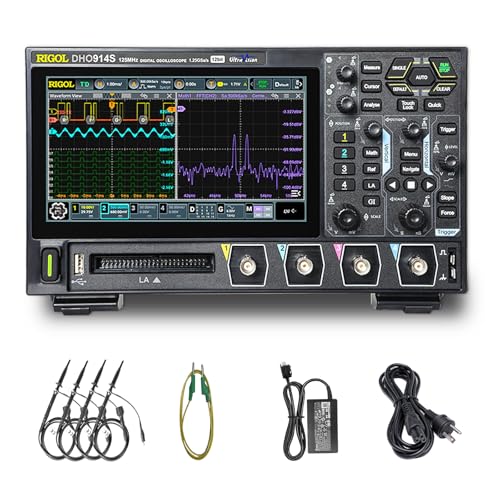
The Rigol DHO914S is the Swiss Army knife of the DHO900 series — a 125 MHz, 4-channel, 12-bit oscilloscope with a built-in 25 MHz arbitrary waveform generator, optional 16-channel logic analyzer probe, and Bode plot analysis for control system work. At $769, it now sits below its sibling the DHO924S (around $899) and faces an immediate question: is saving roughly $130 worth giving up half the bandwidth (125 MHz versus 250 MHz)?
The answer lies in what the DHO914S adds that the DHO924S doesn't have. Mixed-signal capability via the optional logic probe is the headline feature — the DHO914S supports adding 16 digital input channels for true analog+digital simultaneous analysis. The Bode plot analyzer is the second differentiator, providing automated frequency response characterization for filter design and control loop work. Combined with the 4-channel analog inputs and built-in function generator, the DHO914S becomes a comprehensive bench instrument that can replace multiple separate tools.
This review evaluates whether the workflow consolidation justifies choosing the lower-bandwidth DHO914S over the DHO924S. For users who would otherwise buy a function generator, a logic analyzer, and a network analyzer separately, the DHO914S's integration provides real cost savings. For users who only need oscilloscope functionality, the DHO924S around $899 with its 250 MHz bandwidth is the better value. The DHO914S is a specialist tool for a specific workflow — when that workflow matches your needs, it's genuinely excellent.
◆ Pros & Cons
Pros
- Built-in 25MHz arbitrary waveform generator — saves buying a separate signal source
- 16 digital channels available via optional logic probe — true mixed-signal capability
- 12-bit ADC with 125MHz bandwidth is a solid all-around combination
- 50Mpt memory depth matches the DHO924S
- Same compact DHO form factor with USB-C power support
- Bode plot analysis built in — useful for filter and feedback loop characterization
Cons
- In the upper-$700s, it costs more than the DHO804 while offering lower bandwidth than the DHO924S
- 125MHz bandwidth is lower than the DHO924S's 250MHz
- Logic analyzer probe is an additional purchase — not included
- Fan noise is present, consistent with the DHO series
- The DHO924S also includes a function generator, making the price gap harder to justify
You'll Also Need
Common accessories that pair well with this scope.
Hantek PP-200 200MHz Probe Set (2x)
Replacement 200MHz passive probes compatible with most bench scopes
Buy on Amazon · $18 →DEVMO USB Logic Analyzer 8-Channel
8-channel logic analyzer for debugging digital signals and protocols
Buy on Amazon · $14 →Coaxial BNC Cable 50Ω (3-pack)
BNC to BNC 50Ω coax cables for signal connections
Buy on Amazon · $12 →◆ More Bench Gear We've Reviewed
Beyond the scope: other instruments hobbyists keep on the bench.
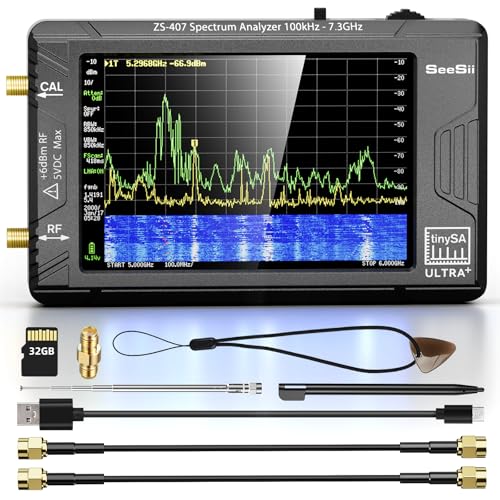
See signals in the frequency domain
TinySA Ultra
$260.9
See all see signals in the frequency domain picks →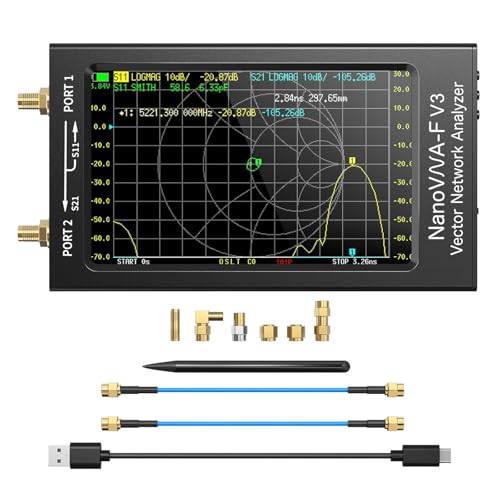
Sweep RF and antenna performance
NanoVNA-F V3
$299.99
See all sweep rf and antenna performance picks →Rigol DHO914S
Prices may change · Free shipping with Prime
◆ Design & Build Quality
The DHO914S shares the compact DHO800-series chassis: 265 x 162 x 77 mm, 1.78 kg. This is the smaller form factor that the DHO800 series uses, distinct from the larger DHO900 series chassis. The compact size is genuinely advantageous for bench setups with limited space, and the lower weight makes the scope easier to reposition.
Build quality matches the rest of the DHO platform — solid plastic enclosure, clean industrial design, and the 7-inch IPS touchscreen on the left with physical controls on the right. The 12-bit ADC and the integrated function generator and Bode plot features all fit within the same compact chassis as the simpler DHO800 models.
The 7-inch IPS touchscreen is the same panel used across the DHO platform. Wide viewing angles, accurate colors, responsive multi-touch input. The 1024x600 resolution provides crisp text and waveform rendering. The touchscreen interaction is the modern strength of the DHO platform — tap to place cursors, pinch to zoom, tap to configure measurements. The interaction model is significantly faster than button-and-knob navigation for most common tasks.
The physical knobs surround the display in the standard DHO layout — vertical scale and position per channel, horizontal scale and position, trigger level, and function-specific knobs. Knob feel is consistent with the rest of the DHO platform, with smooth rotation and clear detents.
The rear panel adds the function generator output (BNC), the logic analyzer probe connector (proprietary, requires the optional SPL2016 probe), and standard USB and LAN ports. The USB-C power input is included on the DHO914S, which provides genuine field deployment flexibility — you can run the scope from any USB-C PD source.
The included probes are decent quality standard Rigol passive probes. They support the 125 MHz bandwidth comfortably and provide good signal fidelity for general work. For specialized measurements, upgrading to higher-grade probes is straightforward.
Fan noise is consistent with the rest of the DHO platform — audible in quiet environments, inaudible in normal workshop ambient noise. Several community members have documented DIY fan swaps with Noctua fans for quieter operation, which is a viable modification.
◆ Performance & Specifications Deep Dive
The 125 MHz bandwidth sits between the DHO814's 100 MHz and the DHO924S's 250 MHz. For most hobbyist work, 125 MHz is sufficient — Arduino, ESP32, basic STM32 work, standard SPI/I2C, and most analog circuit work all fit within the bandwidth envelope. Users hitting the bandwidth ceiling typically need either substantially higher bandwidth (250+ MHz) or specialized RF measurement, neither of which is the DHO914S's design target.
The 1.25 GSa/s sample rate matches the rest of the DHO platform. At 125 MHz bandwidth, this provides 10x oversampling for clean waveform reconstruction. The Nyquist requirement is 250 MSa/s, so the actual sample rate provides 5x headroom.
The 50 Mpt memory depth matches the DHO924S and exceeds the DHO814's 25 Mpt. At full sample rate, 50 million points capture 40 milliseconds of continuous signal — enough for extended protocol transactions, multi-second sensor monitoring, and detailed analog event analysis.
The 12-bit ADC provides 4096 vertical resolution steps, matching the rest of the DHO platform. For analog signal detail, the 12-bit advantage over 8-bit scopes is genuinely visible. Power supply ripple analysis, audio circuit work, and any signal with small amplitude variations all benefit from the additional resolution.
The trigger system is comprehensive — Edge, Pulse, Slope, Video, Pattern, Duration, Timeout, Runt, Window, Delay, Setup/Hold, and Nth Edge. With 4 analog channels (plus 16 optional digital channels via the logic probe), pattern triggering becomes genuinely powerful for complex multi-signal scenarios.
The built-in 25 MHz arbitrary waveform generator is a major differentiator. Standard waveforms (sine, square, triangle, ramp, pulse, noise, DC) are included plus arbitrary waveform definition via the touchscreen interface or PC software upload. For users who would otherwise buy a separate function generator ($200-$400), this is real money saved.
The Bode plot analyzer is the DHO914S's most distinctive feature. By sweeping the built-in function generator across a frequency range and measuring the response with the oscilloscope inputs, the scope automatically generates gain and phase plots versus frequency. For filter design, amplifier characterization, feedback loop analysis, and control system work, this turns hours of manual measurement into minutes of automated capture.
The optional 16-channel logic analyzer probe (SPL2016, sold separately) adds true mixed-signal capability. With the probe installed, the DHO914S supports simultaneous capture of 4 analog channels and 16 digital channels, with shared trigger and time-base. For embedded debugging where you need to correlate analog sensor readings with digital protocol activity, the mixed-signal capability is genuinely transformative.
◆ Software & User Experience
The DHO914S runs the same UltraVision II firmware as the rest of the DHO platform. The touchscreen interface, menu navigation, autoset behavior, and automatic measurements all work identically to the DHO924S, DHO814, and DHO802. Users coming from any DHO scope will find the DHO914S immediately familiar.
The function generator interface is well-integrated. A dedicated screen lets you configure output waveform type, frequency, amplitude, offset, and parameters specific to each waveform type. Arbitrary waveform definition supports up to 14 standard shapes plus user-defined arbitrary waveforms uploaded via USB or LAN. The waveform output is on a dedicated rear-panel BNC with 50-ohm impedance.
The Bode plot analysis interface is the DHO914S's most distinctive software feature. Configure the frequency sweep range, amplitude, and measurement parameters, then start the sweep. The scope automatically measures gain and phase at each frequency point and plots the response. For filter characterization, amplifier frequency response, and control loop analysis, the workflow is genuinely faster than manual measurement.
Protocol decoding includes SPI, I2C, UART, and CAN. Like the rest of the DHO800-series, LIN is not included. For automotive hobbyists needing LIN, the DHO914S is not the right scope. CAN-only handles the most common automotive protocol use cases though.
With the optional logic probe installed, the mixed-signal interface becomes available. Digital channel configuration, threshold setting per channel group, and combined analog+digital triggering and display all work through the touchscreen interface. The logic analyzer view shows digital signals as line traces alongside the analog channel waveforms, with shared time-base for correlation analysis.
WiFi connectivity is included with browser-based remote access. The remote interface mirrors the scope's display and accepts touch input. For headless operation or remote monitoring, the WiFi capability is genuinely useful.
SCPI command support enables Python and LabVIEW automation for scripted test sequences. The function generator commands integrate cleanly into automated test workflows — generate a stimulus signal, capture the response, analyze the result, repeat.
Firmware updates have been frequent on the DHO platform. Bug fixes, performance improvements, and occasional feature additions arrive through firmware updates. The DHO914S benefits from the same development pipeline as the rest of the DHO platform.
◆ Mixed-Signal & Bode Plot Workflows
The DHO914S's mixed-signal capability is its strongest workflow advantage over a pure oscilloscope. With the optional SPL2016 logic probe installed, the scope supports simultaneous capture of 4 analog channels and 16 digital channels with shared trigger and time-base. The combined display shows analog waveforms and digital traces aligned in time, with cursor measurements that work across both channel types.
For embedded debugging, this matters because real systems combine analog and digital signals constantly. A motor controller has digital PWM inputs (logic analyzer) and analog current feedback (oscilloscope). An RF transceiver has digital SPI control (logic analyzer) and analog IF signals (oscilloscope). A power supply has digital enable/PGOOD signals (logic analyzer) and analog output ripple (oscilloscope). Without mixed-signal capability, you debug these systems by alternating between an oscilloscope and a separate logic analyzer, mentally correlating timing between two separate captures. The DHO914S eliminates that friction.
The logic analyzer view supports protocol decoding on digital channels — SPI, I2C, UART decoded from the digital inputs while analog channels capture related signals. For embedded systems where the digital protocol activity drives or responds to analog measurements, the combined view is genuinely transformative.
The Bode plot analyzer is the DHO914S's second workflow differentiator. Frequency response measurement of filters, amplifiers, and feedback loops is one of the most common analog characterization tasks, and the traditional manual approach is tedious — set the function generator frequency, measure gain and phase, adjust frequency, repeat.
The DHO914S automates this entire workflow. Configure the sweep range, start the analysis, and the scope sweeps the built-in function generator across the frequency range while measuring the response at each point. The result is a plot of gain versus frequency and phase versus frequency, with automatic markers at -3 dB points, gain crossover, and phase margin.
For filter design, this is the right tool. Anti-aliasing filter characterization, EMI filter measurement, and audio crossover network analysis all become 5-minute operations instead of hour-long manual sequences. For feedback loop analysis, the Bode plot reveals stability margins (gain margin and phase margin) directly. For control system design, frequency response characterization is essential for stability and performance verification.
The 25 MHz function generator alone, separated from the Bode plot capability, replaces a standalone instrument that would cost $200-400 separately. For users who would otherwise buy a Rigol DG1022Z ($249), Siglent SDG1032X ($299), or similar function generator, the DHO914S's integration provides real cost savings.
For users who don't need mixed-signal, function generator, or Bode plot capabilities, the DHO914S is hard to justify over the DHO924S. The DHO924S around $899 provides similar oscilloscope capability with higher bandwidth and includes a function generator (with limited capability compared to the DHO914S's 25 MHz AWG). The DHO914S is purpose-built for users who specifically value the integrated workflow.
◆ Real-World Use Cases
For embedded systems debugging with mixed analog and digital signals, the DHO914S with the logic probe is the right tool. Motor control, audio CODECs with SPI control, RF transceivers with digital configuration, and any system combining analog measurement with digital protocol activity benefits from the combined view. The mixed-signal capability is the DHO914S's primary differentiator.
For analog filter design and characterization, the Bode plot analyzer is genuinely transformative. Anti-aliasing filter design verification, EMI filter measurement, audio crossover network characterization, and any frequency response measurement task becomes a streamlined automated workflow. For users who do filter work regularly, this feature alone justifies a significant portion of the price premium.
For control system development, the Bode plot capability supports stability analysis directly. Gain and phase margin measurement, crossover frequency identification, and loop characterization all become integrated workflows rather than manual measurement sequences. For motor control, power supply feedback loop work, and analog control system design, the DHO914S's Bode plot is the right tool.
For users who would otherwise buy a separate function generator, the integrated 25 MHz AWG saves money and bench space. The function generator capability is competitive with standalone instruments in the $250-400 range, and the integration provides workflow advantages for stimulus-response testing.
For general embedded development without mixed-signal needs, the DHO914S is overkill. The DHO924S around $899 provides similar oscilloscope capability with higher bandwidth and a built-in function generator, though at a higher current price. For pure oscilloscope use cases, the DHO924S is the premium upgrade rather than the budget alternative.
For automotive electronics work, the DHO914S's lack of LIN decoding (only CAN included) is a meaningful limitation. The DHO924S has the same protocol limitation, but Siglent's SDS804X HD and SDS814X HD both include LIN free. For automotive hobbyists, the Siglent scopes are better-positioned.
For educational use, the DHO914S provides a comprehensive single-instrument bench setup. Function generator for stimulus, oscilloscope for response, mixed-signal capability for advanced experiments, and Bode plot analysis for control system courses. For laboratory or workshop educational environments, the integrated capability simplifies bench setup.
For professional use cases involving frequent filter design, control system work, or mixed-signal embedded debugging, the DHO914S's workflow advantages justify the price. For occasional use of these features, separate dedicated instruments often provide better individual performance at lower total cost.
◆ Who Should Buy This (And Who Shouldn't)
Buy the DHO914S if you do mixed-signal embedded debugging regularly and value having analog and digital capture in a single instrument. The optional logic probe upgrade pathway turns the DHO914S into a comprehensive embedded debugging tool, eliminating the friction of switching between separate oscilloscope and logic analyzer instruments.
Buy it if you do analog filter design, control system work, or any frequency response characterization. The Bode plot analyzer feature is genuinely transformative for users who do this work regularly. For users who do filter or control system characterization weekly, the time savings alone justify choosing this lower-bandwidth model.
Buy it if you would otherwise buy a separate function generator. The integrated 25 MHz AWG saves $200-400 of standalone instrument cost and bench space. For workshops where bench space is limited, the consolidation matters.
Buy it if you want comprehensive bench instrument capability in a compact form factor. The DHO800 chassis is genuinely smaller than the DHO900 chassis or separate-instrument setups. For mobile workshops, field service, or any space-constrained workbench, the compact size is valuable.
Do not buy the DHO914S if you only need oscilloscope functionality. The DHO924S around $899 provides similar oscilloscope capability with 2x the bandwidth (250 MHz versus 125 MHz), but it is a premium-priced step up. For pure scope use, choose it only if bandwidth matters more than the DHO914S's mixed-signal and Bode-plot features.
Do not buy it if you need LIN decoding for automotive work. The DHO914S includes CAN-only protocol decoding, not LIN. For LIN-based body electronics work, Siglent's HD-series scopes (SDS804X HD, SDS814X HD) include LIN free and would be a better choice.
Do not buy it if you need maximum bandwidth at the lowest price. The DHO924S's 250 MHz bandwidth is the premium bandwidth play in Rigol's hobbyist lineup. The DHO914S's 125 MHz is lower than the DHO924S, so the DHO914S only makes sense if its integrated features matter more than bandwidth.
Do not buy it if the optional logic probe is unaffordable. The mixed-signal capability is the DHO914S's primary differentiator, and the probe is a meaningful additional purchase. Without the logic probe, you're paying for capability you can't fully use.
◆ Alternatives Worth Considering
The Rigol DHO924S around $899 is the most obvious alternative — same DHO platform, 2x the bandwidth (250 MHz), and a built-in function generator, but without the DHO914S's mixed-signal emphasis or Bode-plot positioning. For users who don't need mixed-signal or Bode plot analysis and can pay the premium, the DHO924S is the cleaner pure-scope upgrade.
The Siglent SDS814X HD at $587 is the cross-brand competitor. 100 MHz bandwidth (versus 125 MHz on the DHO914S), 12-bit ADC, 2 GSa/s sample rate, 50 Mpt memory, free CAN and LIN decoding, and optional 16-channel logic probe for mixed-signal. For users who specifically value Siglent's ADC quality and free LIN, the SDS814X HD provides similar capability for $182 less.
The Siglent SDS1104X-U at $419 is the older Siglent alternative with comprehensive features. 100 MHz, 4 channels, 14 Mpt memory, free CAN/LIN, and a more conventional benchtop chassis. For users who don't need the modern touchscreen interface, the SDS1104X-U offers strong value at a lower price point.
For users who specifically need the function generator capability, the standalone Rigol DG1022Z at $249 is a strong alternative. Combined with the DHO924S around $899, the total is above the DHO914S but gives you more bandwidth and dedicated function-generator capability. The trade-off is two instruments versus one integrated unit.
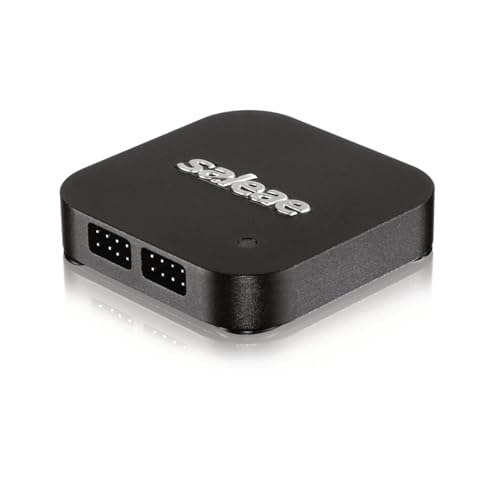
For users who specifically need standalone logic analyzer capability, the Saleae Logic 8 at $229 (or Pro models at higher prices) provides industry-leading software and 8-channel digital capture. Combined with the DHO924S, the total is meaningfully higher than the DHO914S with logic probe, but with significantly better logic analyzer software (Saleae's Logic 2 is widely considered the best PC-based logic analyzer software).
For users who need both mixed-signal and deeper analysis features, the Siglent SDS2104X Plus around $1,399 is the next-tier alternative. 100 MHz bandwidth with upgrade options, 4 channels, very deep memory, optional logic probe, and Siglent's premium feature set. For serious mixed-signal embedded work, the SDS2104X Plus is a meaningful step up but at a significantly higher price.
Our Verdict
The Rigol DHO914S is Rigol's Swiss Army knife oscilloscope — 4 analog channels, a 25MHz function generator, optional 16-channel logic analyzer, and Bode plot analysis in the compact DHO form factor. The mixed-signal capability is the real differentiator: if you're debugging embedded systems where you need to correlate analog and digital signals simultaneously, the logic analyzer option makes this genuinely useful in ways a pure analog scope isn't. The built-in AWG saves you $100-200 on a standalone function generator. The catch is that pure oscilloscope buyers can either spend less on a DHO804 or spend more on the 250MHz DHO924S. The DHO914S only pulls ahead if you need the logic analyzer capability or the Bode plot feature for control loop design.
Rigol DHO914S
$769
Prices may change · Free shipping with Prime
◆ Full Specifications
| Full Specifications | |
|---|---|
| Bandwidth | 125MHz |
| Sample Rate | 1.25GSa/s |
| Channels | 4 |
| Memory Depth | 50 Mpts |
| Display Size | 7" |
| Display Type | IPS Touchscreen |
| Form Factor | Benchtop |
| Weight | 1.78kg |
| Dimensions | 265 x 162 x 77 mm |
| Protocol Decoder | SPI, I2C, UART, CAN |
| Function Generator | Yes |
| WiFi | Yes |
| Battery Option | No |
| Trigger Types | Edge, Pulse, Slope, Video, Pattern, Duration, Timeout, Runt, Window, Delay, Setup/Hold, Nth Edge |
◆ Frequently Asked Questions
Why buy the DHO914S instead of the DHO924S?
Do I need the optional logic probe?
Is the Bode plot feature actually useful?
Can the DHO914S decode LIN bus signals?
Is 125 MHz bandwidth enough?
Can I use the function generator independently from the oscilloscope?
How does the DHO914S compare to buying separate instruments?
Is the DHO914S worth buying for a teaching lab?
◆ Related Buying Guides
Compare With Similar Scopes
◆ Head-to-Head Comparisons
Rigol DHO914S
$769
Prices may change · Free shipping with Prime