Best Logic Analyzers for Hobbyists
The other essential debugging tool — for when you need to see what's in the data, not just the signal shape.
What Is a Logic Analyzer?
A logic analyzer captures digital signals across multiple channels simultaneously and decodes them into human-readable protocol data — bytes sent over SPI, I2C messages, UART characters. Unlike an oscilloscope, which shows you voltage waveforms, a logic analyzer answers a different question: "what data was transmitted, and was it correct?" For Arduino and embedded work, a $60 logic analyzer often gives you more useful debugging information than a $400 oscilloscope.
The most popular USB logic analyzers in the hobbyist market work with PulseView — free, open-source software that decodes 100+ protocols on Windows, macOS, and Linux. You connect the analyzer to your target circuit, trigger a capture, and see the decoded bytes directly on screen.
All Logic Analyzers Reviewed
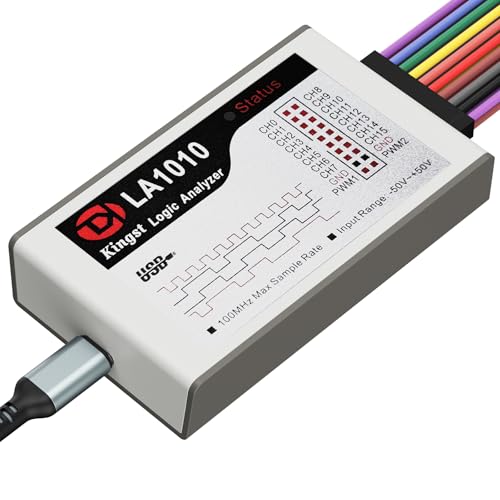
The LA1010 is the RTL-SDR of logic analyzers — cheap, PulseView-compatible, and the community has solved every problem you'll run into. For under $60 there's nothing better for Arduino and basic protocol debugging.
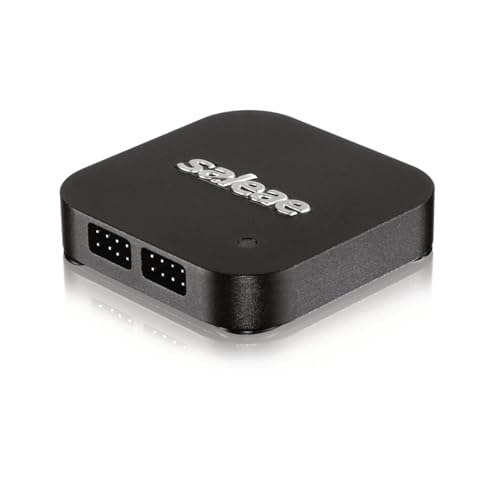
The Saleae Logic 8 is the tool professionals reach for when they need it to just work. Logic 2 software is years ahead of anything else — waveform search, protocol annotations, a UI that doesn't feel like it was designed in 2005. Worth every penny if you debug embedded systems regularly.
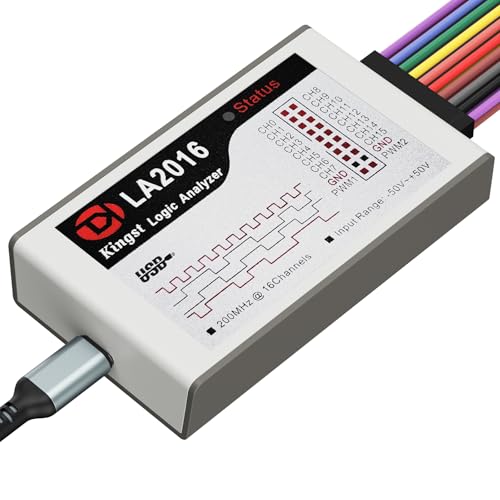
The LA2016's 200MHz sample rate and 16 channels are genuinely impressive for $80. The KingstVIS software isn't as polished as PulseView, but with the open-source firmware it handles high-speed protocols where cheaper tools struggle.
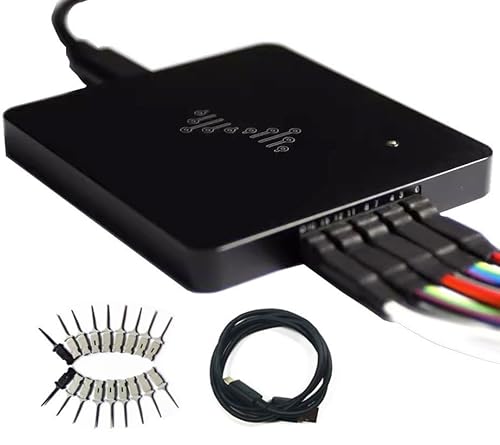
The DSLogic U3Pro16 hits a sweet spot — 1GHz buffer sample rate and a 256MB deep buffer means you can capture long, fast sequences without losing data. Better than the LA2016 for demanding work; cheaper than the Saleae.
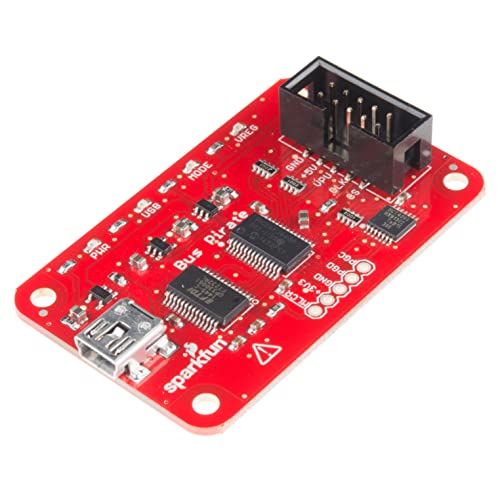
The Bus Pirate 5 isn't a pure logic analyzer — it can also talk to chips directly, making it uniquely useful for hardware hacking and debugging unknown protocols. A great second tool for someone who already has a basic analyzer.
Temporarily out of stock
Logic Analyzer vs Oscilloscope — Which Do You Need?
An oscilloscope shows you analog signal shape — voltage over time. A logic analyzer shows you digital state — what bytes are being transmitted. They answer completely different questions and work best as a team.
If you debug SPI, I2C, or UART between chips, a logic analyzer decodes it faster and cleaner than a scope ever will. If you diagnose analog circuits, signal integrity, or power issues, you need an oscilloscope. Most serious hobbyists eventually own both.
How to Choose a Logic Analyzer
Channels
Each channel monitors one signal line. SPI uses 4 wires, I2C uses 2, UART uses 2. 8 channels covers most Arduino work; 16 channels handles complex buses and FPGA debugging.
Sample Rate
Must be at least 4× your protocol's clock speed for accurate capture. 100MHz is fine for I2C (400kHz) and SPI (up to 25MHz). FPGA work at 100MHz+ needs a 400MHz+ analyzer.
Protocol Support
PulseView (open-source) decodes 100+ protocols and runs on most USB analyzers. Proprietary software is often worse. Check that your target protocols (CAN, JTAG, DMX) are supported before buying.
Software Quality
PulseView is free and excellent. Saleae's Logic 2 is best-in-class but tied to their hardware. Avoid analyzers that only ship Windows-only proprietary software with no open alternative.
Already own an oscilloscope? Make sure you have the right probes.
Best Oscilloscope Probes →