Rigol
Rigol DHO814 Review
Reviewed by HobbyistScope Team · Updated May 2026
$549
Temporarily out of stock
Check the current alternatives below before buying.
◆ At a Glance
◆ Best For
◆ Overview
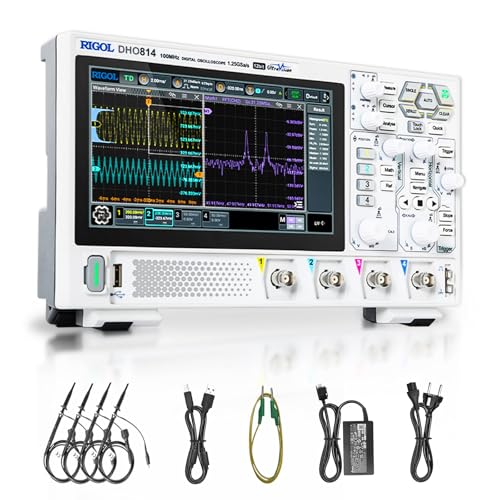
The Rigol DHO814 is the mid-tier 4-channel entry in Rigol's 12-bit DHO800 lineup, offering 100 MHz bandwidth, the same modern touchscreen interface as the rest of the DHO series, and USB-C power compatibility — all in a compact form factor that's noticeably smaller than the DHO900 series. At $549, it occupies a strange middle ground that becomes the entire story of this review.
Within the DHO800 family, the DHO814 sits between the DHO802 ($329, 2 channels, 70 MHz) and the DHO924S, which now lives closer to the premium tier around $899. That second comparison matters, but it is no longer an automatic value win: the DHO924S provides 2.5x the bandwidth, double the memory depth, a built-in 25 MHz function generator, and CAN/LIN decoding, but it costs substantially more.
The DHO814's case rests on three things: the more compact DHO800 form factor (versus the larger DHO900 chassis), the USB-C power input (the DHO924S uses a barrel connector), and the lower bandwidth that some users actually prefer for specific work where excess bandwidth amplifies noise. None of these are headline features — they're niche advantages for specific use cases. For most buyers, the DHO814 is a difficult recommendation unless you find it significantly discounted below MSRP. The 12-bit ADC and protocol decoding capabilities are excellent; the price-versus-DHO924S problem is just hard to ignore.
◆ Pros & Cons
Pros
- 12-bit ADC — the Reddit community now considers this mandatory for new scope purchases
- Compact form factor is noticeably smaller and lighter than the DHO900 series
- Same modern touchscreen interface as the DHO924S — intuitive and responsive
- 100MHz bandwidth handles most hobbyist and embedded signals comfortably
- USB-C power input means you can run it from a power bank in the field
- CAN decoding included — Rigol doesn't always include this on lower-tier models
Cons
- Fan noise is a known complaint in the DHO800 series — audible in quiet rooms
- At ~$549, it sits between the DHO804 value pick and the much pricier DHO924S
- 25Mpt memory is half the DHO924S's 50Mpts
- No built-in function generator
- The Siglent SDS804X HD offers similar 12-bit performance for $100 less at 70MHz
You'll Also Need
Common accessories that pair well with this scope.
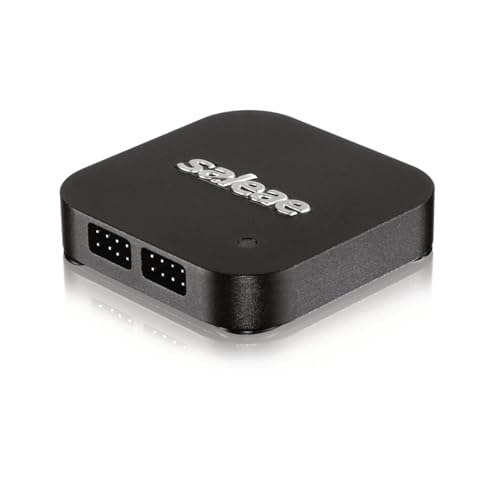
Hantek PP-200 200MHz Probe Set (2x)
Replacement 200MHz passive probes compatible with most bench scopes
Buy on Amazon · $18 →DEVMO USB Logic Analyzer 8-Channel
8-channel logic analyzer for debugging digital signals and protocols
Buy on Amazon · $14 →Coaxial BNC Cable 50Ω (3-pack)
BNC to BNC 50Ω coax cables for signal connections
Buy on Amazon · $12 →◆ More Bench Gear We've Reviewed
Beyond the scope: other instruments hobbyists keep on the bench.
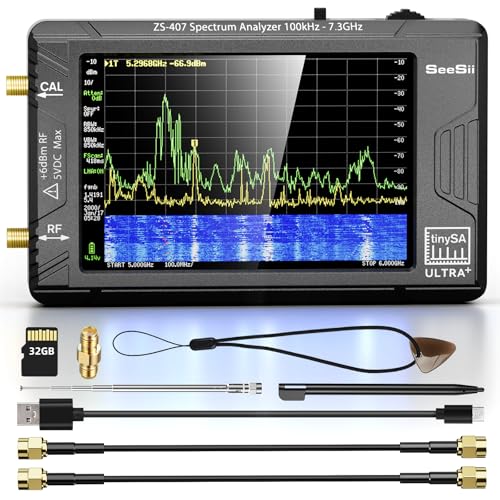
See signals in the frequency domain
TinySA Ultra
$260.9
See all see signals in the frequency domain picks →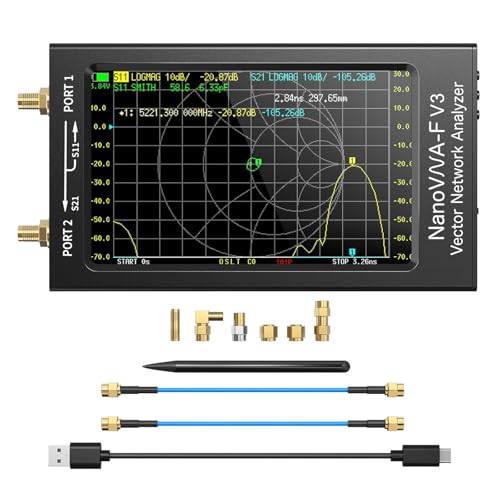
Sweep RF and antenna performance
NanoVNA-F V3
$299.99
See all sweep rf and antenna performance picks →Rigol DHO814
Currently not a buy recommendation on Amazon.
Prices may change · Free shipping with Prime
◆ Design & Build Quality
The DHO814 shares the compact DHO800 chassis with the DHO802: 265 x 162 x 77 mm, 1.78 kg. Side-by-side with the DHO924S's larger 350 x 210 x 120 mm body, the DHO814 is genuinely portable in a way the DHO900 series isn't. For bench setups where space is at a premium, or for occasional field use, the smaller footprint matters.
Build quality is consistent with the rest of the DHO platform. The plastic enclosure feels solid without the flex you encounter on Hantek or FNIRSI budget scopes. The front panel layout is clean — 7-inch IPS touchscreen on the left, physical knobs and buttons on the right, four BNC channel inputs on the front, USB-C power and data ports on the rear.
The 7-inch IPS touchscreen is the same panel used across the DHO800 and DHO900 series. Wide viewing angles, accurate colors, responsive multi-touch input. Pinch-to-zoom works smoothly, tap-to-cursor placement is faster than equivalent button navigation, and the overall experience is genuinely modern. Compared to the DS1054Z's TFT panel or the Hantek DSO5072P's basic display, the IPS panel is a substantial upgrade.
The physical knobs surround the touchscreen — vertical scale and position per channel, horizontal scale and position, trigger level, intensity, and a few function-specific knobs. The combination of touch and physical controls works well: touch for quick navigation and configuration, knobs for real-time adjustments while watching the signal. Knob feel is good, with smooth rotation and clear detents.
The USB-C power input is a small but practical advantage. You can power the DHO814 from any USB-C PD source — phone charger, laptop power brick, or portable battery — making field deployment genuinely possible. The DHO924S uses a barrel connector and requires its included AC adapter, which is less flexible.
Fan noise carries over from the rest of the DHO series. It's audible in quiet environments and inaudible in normal workshop ambient noise. Several community members have documented DIY fan swaps using lower-noise Noctua fans, which is a viable mod if the stock fan bothers you.
◆ Performance & Specifications Deep Dive
The 100 MHz bandwidth is the DHO814's middle-ground specification. Higher than the DHO802's 70 MHz and the DS1054Z's 50 MHz stock (100 MHz hacked), but well below the DHO924S's 250 MHz. For most hobbyist embedded work, 100 MHz is sufficient. Arduino at 16 MHz, ESP32 SPI at typical clock rates, I2C at any standard speed, and most analog circuit work all fit comfortably within the bandwidth envelope.
Where 100 MHz becomes limiting: high-speed SPI above 30 MHz, USB signal analysis, fast switching power supply noise above 80 MHz, and any RF work in the HF or VHF range. For these applications, the DHO924S's 250 MHz bandwidth provides genuine headroom that the DHO814 cannot match.
The 1.25 GSa/s sample rate is identical to the DHO802 and DHO924S. At 100 MHz bandwidth, this provides 12.5x oversampling, which is excellent for waveform reconstruction. The Nyquist requirement is only 200 MSa/s, so the actual sample rate provides substantial margin for accurate waveform capture.
The 25 Mpt memory depth is half the DHO924S's 50 Mpt but generous for the price tier. At full sample rate, 25 million points capture 20 milliseconds of continuous signal. For protocol decoding, this is enough for complete I2C transactions, multi-byte SPI exchanges, or extended UART communications. For longer-duration captures — sensor logging over multiple seconds, intermittent fault hunting — the 50 Mpt of the DHO924S provides meaningful additional headroom.
The 12-bit ADC is the DHO814's core technical advantage over scopes with 8-bit converters. 4096 vertical resolution steps versus 256 means you can see signal details that 8-bit scopes literally cannot represent. For audio work, power supply ripple analysis, sensor characterization, or any application involving small AC signals on top of DC offsets, the 12-bit advantage is genuinely visible.
The trigger system is comprehensive: Edge, Pulse, Slope, Video, Pattern, Duration, Timeout, Runt, Window, Delay, Setup/Hold, and Nth Edge. With 4 channels, pattern triggering is genuinely powerful — you can trigger on specific combinations of digital states across all channels simultaneously, which is valuable for isolating specific conditions in complex digital systems.
The 4-channel capability matches the DHO924S and the DS1054Z, which is the right baseline for serious embedded debugging. SPI requires 4 channels for complete visibility; I2C with interrupt lines uses 3; motor control debugging often needs all 4 simultaneously.
◆ Software & User Experience
The DHO814 runs the same UltraVision II firmware as the rest of the DHO platform. If you've used any DHO scope, you know what to expect — modern touchscreen interface, intuitive menu structure, responsive controls, and the polished overall experience that defines the DHO product family.
The home screen displays active waveforms with measurement overlays. Tapping any waveform brings up channel-specific options. Tapping any measurement value brings up the measurement configuration screen. Tapping anywhere in the time-domain area lets you place cursors or zoom. The interaction model is consistent and learnable within an hour of use.
Autoset is fast and intelligent. Connect a probe to an unknown signal, tap Autoset, and within a second the scope identifies the signal, sets reasonable timebase and voltage scale, and triggers correctly. This is a quality-of-life feature that adds up over hundreds of measurements per week.
Math functions cover the standard set: addition, subtraction, multiplication, division, FFT with multiple window functions, integration, differentiation, and digital filtering. The FFT is competent for basic spectrum analysis — identifying dominant frequency components, checking harmonic content, verifying expected signal spectra. For detailed spectrum analysis, a dedicated spectrum analyzer is still the right tool.
Automatic measurements support up to 5 simultaneous measurements from a comprehensive list of voltage, time, and statistical measurements. Each measurement displays the current value plus optional statistics (min, max, mean, standard deviation) collected over multiple acquisitions.
WiFi connectivity is included and works well. The browser-based remote interface mirrors the scope's screen and accepts touch input from any device. This is genuinely useful for headless operation, remote monitoring, or when the scope is positioned awkwardly on a busy bench. SCPI commands work over USB or network, supporting Python and LabVIEW automation.
The Bode plot analysis feature, when paired with an external signal generator, lets you characterize frequency response of filters, amplifiers, and feedback networks. This is a feature usually reserved for higher-end instruments and is genuinely useful for analog circuit design and verification.
Firmware updates have been frequent on the DHO platform, with Rigol actively adding features and fixing bugs. The DHO814 benefits from this shared development pipeline along with the rest of the DHO800 and DHO900 series.
◆ Protocol Decoding & Advanced Features
The DHO814 includes protocol decoding for SPI, I2C, UART, and CAN. CAN inclusion at this price tier is a meaningful advantage — Rigol historically charged license fees for CAN on the older DS1000Z series, and the free inclusion on the DHO800 series brings cost parity with Siglent's protocol-friendly approach. LIN decoding is not included; the DHO924S adds LIN to the same decoder set.
SPI decoding leverages all 4 channels to monitor clock, MOSI, MISO, and chip-select simultaneously. The decoded bytes appear as hexadecimal overlays on the waveform traces, with timing data preserved. For SPI debugging on real embedded systems — sensor reads, flash memory access, display driving — this is the use case the DHO814 was built for. The 100 MHz bandwidth handles SPI clocks up to roughly 30 MHz comfortably; faster SPI starts to push the bandwidth ceiling.
I2C decoding displays start/stop conditions, 7-bit and 10-bit addresses, data bytes with read/write bit interpretation, and ACK/NACK status. With SDA and SCL on two channels, you still have two channels available for monitoring related signals like interrupt lines, power rails, or chip enable signals. This is one of the practical reasons 4-channel scopes dominate embedded work — protocol decoding consumes 2 channels but leaves 2 more for context.
UART decoding handles standard baud rates from 9600 to 921600 and supports non-standard rates via manual entry. Both TX and RX can be decoded simultaneously on separate channels, which is valuable for debugging command-response protocols where you need to see the full conversation.
CAN decoding handles standard and extended frame formats with bus speeds up to 1 Mbps. For automotive hobbyists, OBD-II tinkerers, and anyone working with CAN-based industrial protocols, the included decoder removes a common cost barrier. The CAN search function lets you filter for specific frame IDs, which is useful for isolating particular messages in busy automotive networks.
The Bode plot feature, paired with an external function generator, automates frequency response characterization. You sweep a sine wave across a frequency range and the DHO814 plots gain and phase responses. For filter design, amplifier characterization, feedback loop analysis, and control system work, this turns hours of manual measurement into minutes of automated capture.
Waveform recording and playback let you record sequences of triggered waveforms for later analysis. The recording depth depends on memory configuration but provides enough capacity for catching intermittent events that happen too rarely to monitor in real time.
Mask testing supports user-defined pass/fail boundaries around reference waveforms, with violation counting. This is useful for production testing, signal quality monitoring, and verifying that a circuit behaves consistently across operating conditions.
◆ Real-World Use Cases
For embedded development with 4 channels of protocol decoding and 12-bit resolution, the DHO814 is a competent tool. SPI debugging benefits from the full 4-channel visibility. I2C debugging works well with two additional channels for context monitoring. UART analysis is straightforward. CAN decoding for automotive hobbyists is included rather than paid-licensed. The 100 MHz bandwidth covers most embedded signal frequencies you'll encounter.
For Arduino and microcontroller projects, the DHO814 is more capability than most projects require. Verifying PWM output, debugging GPIO timing, monitoring serial communication, and characterizing analog sensor outputs are all comfortable. The 12-bit ADC provides genuinely useful detail for analog signal characterization that 8-bit scopes can't match.
For power supply design and analog circuit work, the 12-bit ADC is the DHO814's strongest argument. Switching power supply ripple analysis, op-amp circuit characterization, audio amplifier work, and any application involving small AC signals on large DC offsets all benefit from the additional vertical resolution. You'll see signal details that simply aren't visible on 8-bit scopes.
For educational use, the modern touchscreen interface lowers the barrier to entry significantly. Students who haven't built scope-operation muscle memory benefit from intuitive tap-to-configure interaction. The 4-channel capability supports the kinds of multi-signal experiments common in electronics courses.
For RF work, the DHO814's 100 MHz bandwidth is limiting. HF work below 30 MHz is comfortable; VHF work above 80 MHz pushes the bandwidth ceiling. For dedicated RF measurement, the DHO924S's 250 MHz or a dedicated spectrum analyzer is more appropriate.
For automotive hobby work, the included CAN decoding is valuable, but the 100 MHz bandwidth is generous for automotive signal frequencies (most automotive electronics operate well below 100 MHz). The trigger flexibility helps with isolating specific CAN frames or correlating multiple ECU signals.
The DHO814's positioning challenge is real: some use cases that justify $549 may also justify stretching to the DHO924S for 2.5x the bandwidth and a function generator, but that is a premium-tier step now rather than a free upgrade. The compact form factor and USB-C power are the niche advantages that justify choosing the DHO814 over the DHO924S — and they're real advantages, just not universally valuable ones.
◆ Who Should Buy This (And Who Shouldn't)
Buy the DHO814 if the compact DHO800 form factor matters to you specifically. For benches with limited space, mobile workshop setups, or any scenario where physical footprint is a constraint, the smaller chassis is a genuine advantage. The DHO924S's larger DHO900 body is not impractical, but it does take up more real estate.
Buy it if USB-C portability matters. The DHO814 runs from any USB-C PD source — phone charger, laptop power brick, USB-C battery pack. The DHO924S uses a barrel connector and its included AC adapter, which is less flexible for field deployment.
Buy it if you find it discounted to $400-450. At that price point, the DHO814 becomes much more competitive with the DHO924S and DS1054Z. Watch for sales, refurbished units, or open-box deals — the DHO814 sees periodic discounting that improves its value proposition significantly.
Do not buy the DHO814 at $549 MSRP if you actually need the DHO924S's 250 MHz bandwidth, 50 Mpt memory, built-in function generator, and LIN decoding. Those upgrades are meaningful, but the DHO924S now costs substantially more. The DHO814 only makes sense if the compact form factor, USB-C power, and lower absolute price matter more than raw bandwidth.
Do not buy it if you need bandwidth above 100 MHz. The DHO924S's 250 MHz is the right choice for higher-frequency work. The DHO814's bandwidth ceiling is real and will limit your work as projects become more demanding.
Do not buy it if community documentation depth matters most. The DS1054Z's decade-old ecosystem of tutorials, forum threads, and answered questions is unmatched by any newer scope. For first-time buyers learning electronics, the DS1054Z's community advantage is genuine even at the cost of older hardware.
◆ Alternatives Worth Considering
The Rigol DHO924S around $899 is the premium alternative. For substantially more money than the DHO814, you get 250 MHz bandwidth (2.5x more), 50 Mpt memory (2x more), a built-in 25 MHz function generator, and CAN/LIN decoding instead of CAN-only. The form factor is larger but not unreasonable. Unless you have a specific reason to prefer the compact DHO800 chassis, the DHO924S is the rational choice.
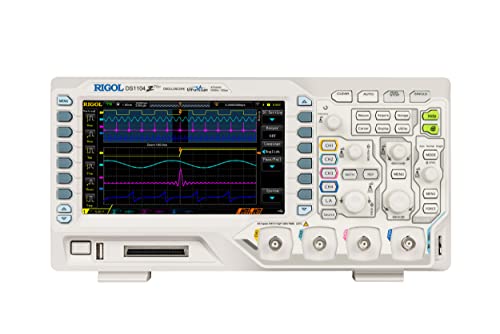
The Rigol DS1054Z at $349 is the budget alternative. For $200 less than the DHO814, you give up the touchscreen, IPS display, USB-C power, 12-bit ADC, and modern UI — but gain the largest oscilloscope community on the internet, the bandwidth hack to 100 MHz, and proven reliability over a decade. For first-time buyers prioritizing learning resources, the DS1054Z remains the safe choice.
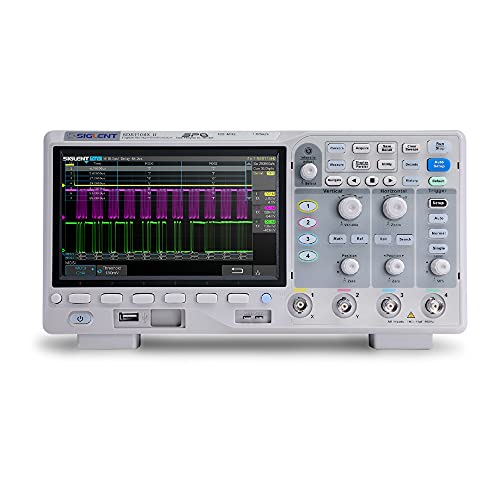
The Siglent SDS804X HD at $461 is the cross-brand competitor. Lower bandwidth (70 MHz stock, 200 MHz unlockable via license) but better sample rate (2 GSa/s versus 1.25 GSa/s), better memory (50 Mpt versus 25 Mpt), CAN/LIN decoding instead of CAN-only, and the cleaner Siglent/LeCroy analog front-end. If the 70 MHz stock bandwidth fits your work and you value cleaner ADC performance, the SDS804X HD is a strong choice.
The Siglent SDS814X HD at $587 is the price-matched Siglent alternative. 100 MHz bandwidth, 4 channels, 12-bit ADC, 2 GSa/s, 50 Mpt memory, CAN/LIN. Better specifications across the board than the DHO814 for $38 more. The trade-off is Siglent's smaller community versus Rigol's larger ecosystem.
The Rigol DHO914S at $769 is the DHO900-series sibling that adds a built-in 25 MHz function generator and optional 16-channel logic analyzer probe. For users who need mixed-signal capability or want an all-in-one bench instrument, the DHO914S provides genuine workflow advantages — but at a price premium.
Our Verdict
The Rigol DHO814 is the mid-tier entry in Rigol's 12-bit DHO800 lineup, offering 100MHz bandwidth and 4 channels in a compact, USB-C-powered package. The 12-bit ADC is the real story here — the Reddit community has essentially made 12-bit resolution the new baseline for oscilloscope recommendations, and the DHO814 delivers. The compact form factor and power bank compatibility are genuine advantages over the larger DHO900 series. The uncomfortable truth is pricing: at ~$549, it has to justify itself against the cheaper DHO804 and the much more expensive DHO924S. The DHO814 makes sense if you value the smaller size, need 100MHz, or find it on sale significantly below MSRP.
Rigol DHO814
$549
Temporarily out of stock
Current Amazon listing is not purchase-ready.
Prices may change · Free shipping with Prime
◆ Full Specifications
| Full Specifications | |
|---|---|
| Bandwidth | 100MHz |
| Sample Rate | 1.25GSa/s |
| Channels | 4 |
| Memory Depth | 25 Mpts |
| Display Size | 7" |
| Display Type | IPS Touchscreen |
| Form Factor | Benchtop |
| Weight | 1.78kg |
| Dimensions | 265 x 162 x 77 mm |
| Protocol Decoder | SPI, I2C, UART, CAN |
| Function Generator | No |
| WiFi | Yes |
| Battery Option | No |
| Trigger Types | Edge, Pulse, Slope, Video, Pattern, Duration, Timeout, Runt, Window, Delay, Setup/Hold, Nth Edge |
◆ Frequently Asked Questions
DHO814 or DHO924S?
Is 100 MHz enough bandwidth for hobbyist work?
Can the DHO814 decode CAN bus signals?
Does the DHO814 have a bandwidth hack?
How does the DHO814 compare to the DS1054Z for first-time buyers?
Does it have a function generator?
Is the USB-C power input actually useful?
Why is the DHO814 priced above the DHO924S?
◆ Related Buying Guides
Compare With Similar Scopes
◆ Head-to-Head Comparisons
Rigol DHO814
$549
Temporarily out of stock
Use the comparison links above to choose an in-stock substitute.
Prices may change · Free shipping with Prime