Hantek 6022BE vs Hantek DSO5072P
Head-to-head spec comparison to help you pick the right scope for your bench.
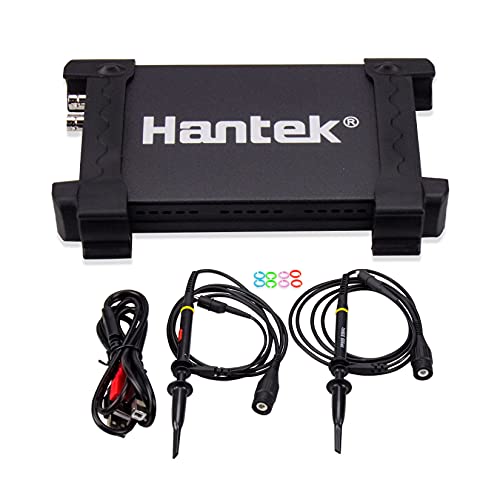
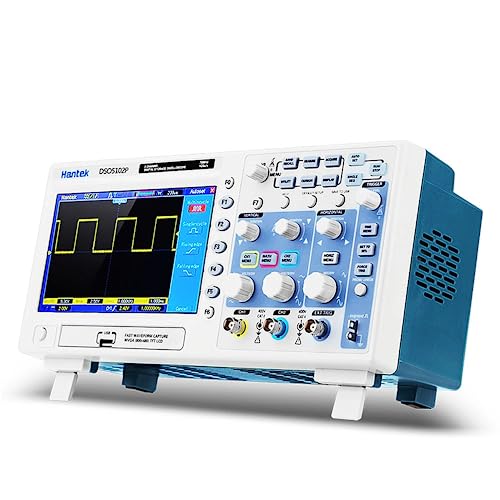
Spec-by-Spec Comparison
| Spec | Hantek 6022BE | Hantek DSO5072P |
|---|---|---|
| Bandwidth | 20 MHz | 70 MHz |
| Sample Rate | 0.048 GSa/s | 1 GSa/s |
| Channels | 2 | 2 |
| Memory Depth | 1 Mpts | 40 Kpts |
| Display Size | N/A | 7" |
| Weight | 0.2 kg | 2 kg |
| Price | $85.29 | $454.89 |
| Rating | 4.5/10 | 6.0/10 |
| Protocol Decoder | No | No |
| Function Gen | No | No |
| WiFi | No | No |
| Battery | No | No |
| Buy on Amazon | Buy on Amazon |
Pros & Cons
Hantek 6022BE
Pros
- Cheapest USB oscilloscope that actually works
- Tiny and portable — fits in a laptop bag or jacket pocket
- Works with open-source OpenHantek software (much better than official drivers)
- Bus-powered via USB — no wall adapter needed
- 1Mpt memory depth is genuinely decent for this price
Cons
- Only 20MHz bandwidth — severely limiting for most real work
- 48MSa/s sample rate means aliasing starts well below 20MHz
- Requires a PC to operate — useless in the field without a laptop
- Bundled software is mediocre; use OpenHantek instead
- No protocol decoding of any kind
Hantek DSO5072P
Pros
- Traditional benchtop form factor — looks and feels like a real scope
- 70MHz bandwidth handles most hobbyist signals without complaint
- Traditional bench layout is useful if you find it discounted below $200
- Simple, button-based interface is easy to learn
Cons
- Only 2 channels limits simultaneous signal debugging
- 40Kpt memory depth is embarrassingly shallow by modern standards
- No protocol decoding — SPI and I2C debugging is impossible
- Fan can be noisy enough to notice in a quiet room
- No software update path to improve functionality
Our Verdicts
Hantek 6022BE
The Hantek 6022BE is the bare minimum USB oscilloscope — and I mean that literally, not as a compliment. At around $85, you get 2 channels and 20MHz of bandwidth piped through your laptop screen, which is enough to verify that a PWM signal exists or check audio frequencies. The 20MHz limit is genuinely painful: you can't reliably see rise times on 3.3V Arduino signals, and anything SPI-related at normal speeds is already at the edge of what this scope can resolve. Skip the official software and use OpenHantek instead — it's actively maintained and much better. If you can stretch to the Analog Discovery 3, the difference is night and day. If you're truly at a sub-$100 ceiling and just need to verify signals exist, this will do — but you'll outgrow it fast.
Hantek DSO5072P
The Hantek DSO5072P only makes sense as a budget benchtop scope when you find it below about $200. At the current marketplace price near $455, skip it. The 70MHz bandwidth and 7-inch display are fine for basic analog checks, but the 40Kpt memory depth is almost unusably shallow next to modern alternatives, and there is no protocol decoding for SPI or I2C. If you need a real first scope, the Rigol DS1054Z gives you 4 channels, deep memory, protocol decoding, and far better community support for less money. If you want a modern touchscreen workflow, the Rigol DHO804 is the cleaner buy.