FNIRSI 1014D vs Hantek 6022BE
Head-to-head spec comparison to help you pick the right scope for your bench.
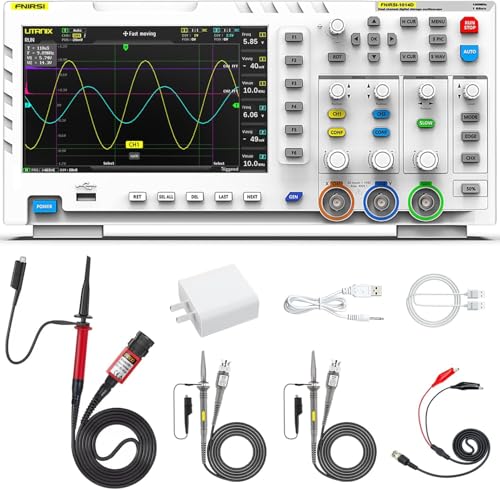
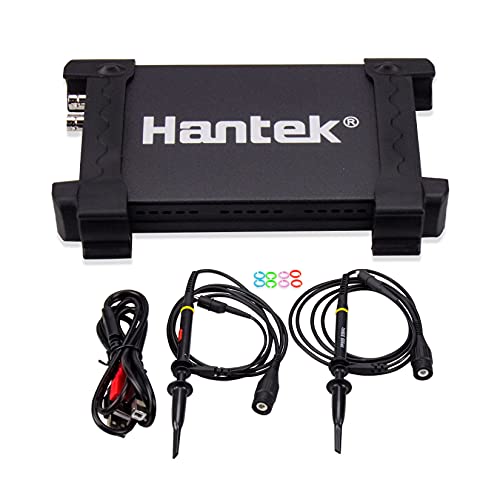
Spec-by-Spec Comparison
| Spec | FNIRSI 1014D | Hantek 6022BE |
|---|---|---|
| Bandwidth | 100 MHz | 20 MHz |
| Sample Rate | 1 GSa/s | 0.048 GSa/s |
| Channels | 2 | 2 |
| Memory Depth | 240 Kpts | 1 Mpts |
| Display Size | 7" | N/A |
| Weight | 0.68 kg | 0.2 kg |
| Price | $169.99 | $85.29 |
| Rating | 5.5/10 | 4.5/10 |
| Protocol Decoder | No | No |
| Function Gen | Yes | No |
| WiFi | No | No |
| Battery | No | No |
| Buy on Amazon | Buy on Amazon |
Pros & Cons
FNIRSI 1014D
Pros
- Affordable entry point around $170
- Built-in function generator is rare at this price
- 7-inch touchscreen in a portable tablet form factor
- Touchscreen interface is genuinely intuitive for beginners
- 100MHz bandwidth is impressive for a sub-$200 scope
Cons
- 240Kpt memory depth is dangerously shallow — you'll hit this limit fast
- Build quality is plasticky; the corners flex under light pressure
- Calibration and accuracy lag well behind established brands
- No protocol decoding — can't decode SPI or I2C
- Firmware updates have been inconsistent
Hantek 6022BE
Pros
- Cheapest USB oscilloscope that actually works
- Tiny and portable — fits in a laptop bag or jacket pocket
- Works with open-source OpenHantek software (much better than official drivers)
- Bus-powered via USB — no wall adapter needed
- 1Mpt memory depth is genuinely decent for this price
Cons
- Only 20MHz bandwidth — severely limiting for most real work
- 48MSa/s sample rate means aliasing starts well below 20MHz
- Requires a PC to operate — useless in the field without a laptop
- Bundled software is mediocre; use OpenHantek instead
- No protocol decoding of any kind
Our Verdicts
FNIRSI 1014D
The FNIRSI 1014D is one of the cheapest ways to get a real oscilloscope on your bench. At around $170, it's hard to complain about 100MHz bandwidth and a built-in signal generator — both of which would cost more from many established bench-scope brands. The honest limitation is the 240Kpt memory depth, which is genuinely painful the moment you try to capture anything longer than a few milliseconds at full sample rate. I'd call this a learning tool, not a precision instrument. If you just want to see what your Arduino signals look like and learn what triggering means, it's a solid starting point. But if you need to trust your measurements or capture serial transactions, save up for a Rigol or Siglent — you'll thank yourself later.
Hantek 6022BE
The Hantek 6022BE is the bare minimum USB oscilloscope — and I mean that literally, not as a compliment. At around $85, you get 2 channels and 20MHz of bandwidth piped through your laptop screen, which is enough to verify that a PWM signal exists or check audio frequencies. The 20MHz limit is genuinely painful: you can't reliably see rise times on 3.3V Arduino signals, and anything SPI-related at normal speeds is already at the edge of what this scope can resolve. Skip the official software and use OpenHantek instead — it's actively maintained and much better. If you can stretch to the Analog Discovery 3, the difference is night and day. If you're truly at a sub-$100 ceiling and just need to verify signals exist, this will do — but you'll outgrow it fast.