Digilent Analog Discovery 3 vs Siglent SDS1104X-U
Head-to-head spec comparison to help you pick the right scope for your bench.
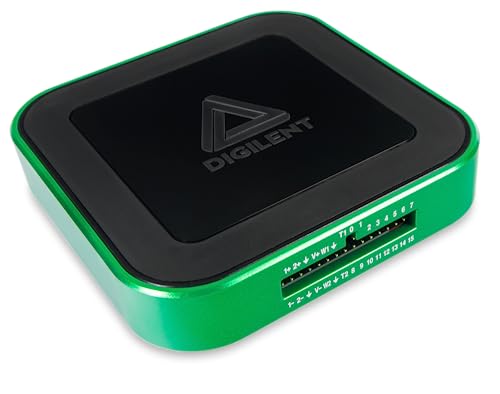
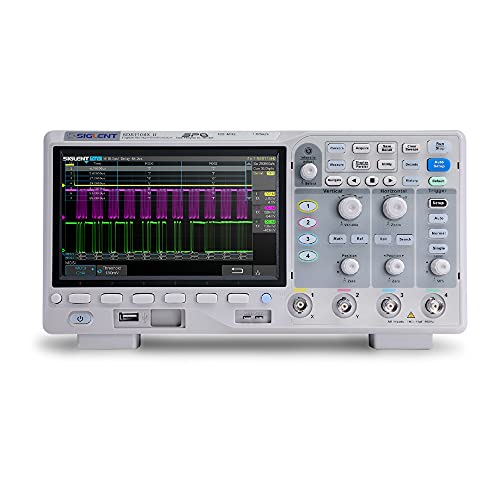
Spec-by-Spec Comparison
| Spec | Digilent Analog Discovery 3 | Siglent SDS1104X-U |
|---|---|---|
| Bandwidth | 50 MHz | 100 MHz |
| Sample Rate | 0.125 GSa/s | 1 GSa/s |
| Channels | 2 | 4 |
| Memory Depth | 32 Kpts | 14 Mpts |
| Display Size | N/A | 7" |
| Weight | 0.15 kg | 3.1 kg |
| Price | $379 | $419 |
| Rating | 7.5/10 | 7.5/10 |
| Protocol Decoder | Yes | Yes |
| Function Gen | Yes | No |
| WiFi | No | No |
| Battery | No | No |
| Buy on Amazon | Buy on Amazon |
Pros & Cons
Digilent Analog Discovery 3
Pros
- 14 instruments in one: scope, logic analyzer, protocol analyzer, function gen, power supplies, network analyzer, and more
- WaveForms software is excellent, free, and regularly updated
- 16-channel logic analyzer is invaluable for digital protocol debugging
- Fits in a pocket — genuinely portable full lab capability
- Great for students and educators who need multiple instrument types
Cons
- Only 125MSa/s — significantly lower than benchtop scopes
- Requires a PC to operate — no standalone use in the field
- 2 analog channels with limited bandwidth compared to benchtop alternatives
- 32Kpt analog memory depth is very shallow for longer captures
- Not a replacement for a dedicated scope when analog performance matters
Siglent SDS1104X-U
Pros
- 4 channels with 100MHz bandwidth — best of both in Siglent's lineup
- CAN and LIN decoding included — no license fees unlike Rigol
- 14Mpt memory depth for long capture sessions
- Better probe compensation and input specs than older Siglent models
- Siglent's firmware has matured significantly with recent updates
Cons
- ~$419 for a 100MHz, non-touchscreen scope is a stiff ask
- No touchscreen — button navigation only
- 1GSa/s sample rate is adequate but not exceptional
- Touchscreen 12-bit scopes now compete hard at nearby prices
Our Verdicts
Digilent Analog Discovery 3
The Digilent Analog Discovery 3 isn't really an oscilloscope — it's a multi-instrument lab that happens to include a 2-channel oscilloscope alongside 13 other tools. The 16-channel logic analyzer is its killer feature for embedded work: you can monitor SPI, I2C, GPIO pins, and PWM outputs simultaneously, something a 4-channel scope simply cannot do. WaveForms software is genuinely excellent — one of the best oscilloscope software experiences on any platform. As a pure oscilloscope, the 125MSa/s sample rate and 32Kpt memory are real limitations that you'll notice on any non-trivial analog signal. This is the right tool if you need a logic analyzer AND a scope AND a function generator and can only buy one device — especially for embedded development and student labs. If you primarily need to measure analog signals or capture long waveforms, a dedicated benchtop scope will serve you better.
Siglent SDS1104X-U
The Siglent SDS1104X-U is Siglent's answer to the 4-channel mid-range market, and its CAN/LIN decoding is its killer differentiator. Rigol charges extra for CAN decoding on most models; Siglent includes it free. If you're doing automotive embedded work — car CAN bus debugging, LIN network analysis, anything that touches vehicle electronics — the SDS1104X-U at $419 is the most cost-effective path to proper protocol support. For general hobbyist use without automotive protocol requirements, the DS1054Z at $349 remains better value, while the DHO804 is the more modern touchscreen alternative near this price. I'd buy the SDS1104X-U specifically if CAN/LIN decoding is non-negotiable.