Digilent
Digilent Analog Discovery 3 Review
Reviewed by HobbyistScope Team · Updated May 2026
$379
◆ At a Glance
◆ Best For
◆ Overview
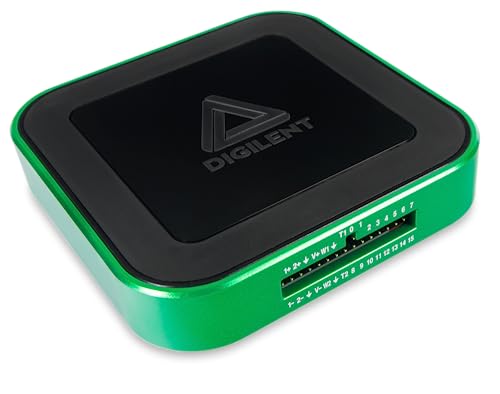
The Digilent Analog Discovery 3 isn't really an oscilloscope. That's not a criticism -- it's the most important thing to understand before you spend $379 on one. The AD3 is a USB multi-instrument that packs 14 different tools into a device smaller than a deck of cards: a 2-channel oscilloscope, a 16-channel logic analyzer, a 2-channel function generator, a 2-channel power supply, a spectrum analyzer, a network analyzer, a protocol analyzer, and more. If you evaluate it purely as an oscilloscope, it loses to every benchtop scope in our lineup. If you evaluate it as a complete test bench in a pocket, it's one of the most remarkable tools in electronics.
The 16-channel logic analyzer is the killer feature that no benchtop oscilloscope can match. When you're debugging an SPI bus and want to see clock, MOSI, MISO, chip select, plus 4 GPIO pins, plus an interrupt line, plus a reset signal -- all simultaneously, all decoded, all time-correlated -- no 4-channel oscilloscope can do that. The Analog Discovery 3 captures all 16 digital channels alongside 2 analog channels, and the WaveForms software displays everything in a single, synchronized view. For digital embedded development, this capability is transformative.
At $379, the AD3 costs less than the Rigol DHO924S (around $899) while providing instrument types that the DHO924S simply doesn't have. The trade-off is that the oscilloscope function -- 50 MHz bandwidth, 125 MSa/s sample rate, 32 Kpt memory depth -- is significantly less capable than a dedicated benchtop scope. This isn't a scope with extras. It's a multi-tool where the oscilloscope is one blade among many.
◆ Pros & Cons
Pros
- 14 instruments in one: scope, logic analyzer, protocol analyzer, function gen, power supplies, network analyzer, and more
- WaveForms software is excellent, free, and regularly updated
- 16-channel logic analyzer is invaluable for digital protocol debugging
- Fits in a pocket — genuinely portable full lab capability
- Great for students and educators who need multiple instrument types
Cons
- Only 125MSa/s — significantly lower than benchtop scopes
- Requires a PC to operate — no standalone use in the field
- 2 analog channels with limited bandwidth compared to benchtop alternatives
- 32Kpt analog memory depth is very shallow for longer captures
- Not a replacement for a dedicated scope when analog performance matters
You'll Also Need
Common accessories that pair well with this scope.
Hantek PP-200 200MHz Probe Set (2x)
Replacement 200MHz passive probes compatible with most bench scopes
Buy on Amazon · $18 →DEVMO USB Logic Analyzer 8-Channel
8-channel logic analyzer for debugging digital signals and protocols
Buy on Amazon · $14 →Coaxial BNC Cable 50Ω (3-pack)
BNC to BNC 50Ω coax cables for signal connections
Buy on Amazon · $12 →◆ More Bench Gear We've Reviewed
Beyond the scope: other instruments hobbyists keep on the bench.
See signals in the frequency domain
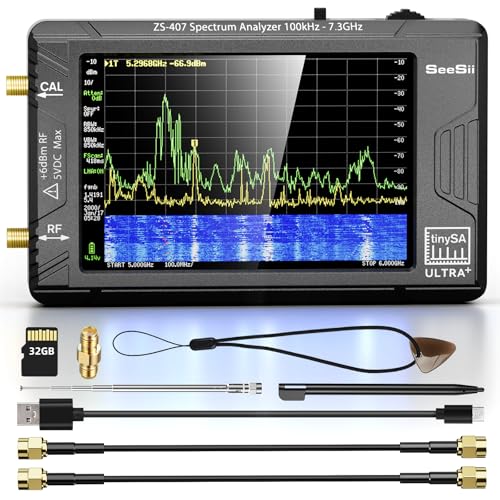
TinySA Ultra
$260.9
See all see signals in the frequency domain picks →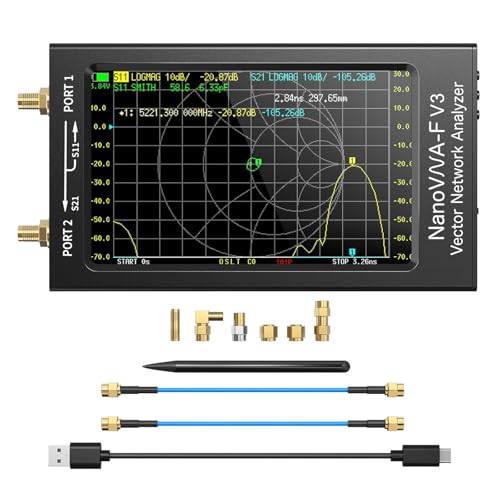
Sweep RF and antenna performance
NanoVNA-F V3
$299.99
See all sweep rf and antenna performance picks →Digilent Analog Discovery 3
Prices may change · Free shipping with Prime
◆ Design & Build Quality
The Analog Discovery 3 is tiny. At 107 x 64 x 21 mm and only 150 grams, it's roughly the size of a business card holder. It fits in a shirt pocket, a laptop bag, or a desk drawer. There is no display, no physical controls, and no standalone capability -- this is a USB instrument that requires a PC to operate. That's a fundamental design choice that defines the entire user experience.
Build quality is good for the size. The aluminum enclosure is solid, the USB-C connector is robust, and the BNC connectors for the analog inputs are properly implemented. The digital inputs use a 30-pin header that accepts individual jumper wires or Digilent's flywire cables. The physical design prioritizes portability and connectivity over bench presence.
Because the AD3 is bus-powered via USB, it doesn't need a wall adapter. You plug it into your laptop and you have a complete test bench. This makes it genuinely portable in a way that no benchtop scope can match -- you can throw it in a bag with your laptop and have a full lab setup anywhere. For field work, on-site debugging, and travel, the form factor is ideal.
The downside of the PC requirement is that you always need a laptop or desktop to use the AD3. Benchtop scopes work as standalone instruments -- you plug in a probe, turn a knob, and see a waveform. The AD3 requires booting up a computer, launching software, and configuring the instrument before you can see your first signal. For a quick check on the bench, a benchtop scope is faster to first measurement.
◆ Performance & Specifications Deep Dive
As an oscilloscope, the AD3's specifications are modest. The 50 MHz bandwidth matches the Keysight EDUX1052A and the stock Rigol DS1054Z but falls well short of the DHO924S's 250 MHz or the Siglent SDS1202X-E's 200 MHz. The 125 MSa/s sample rate is significantly lower than the 1+ GSa/s offered by every benchtop scope in our lineup. And the 32 Kpt analog memory depth is the shallowest in our entire lineup except for the FNIRSI handheld scopes.
These numbers tell a clear story: the AD3 is not meant to compete with dedicated oscilloscopes on analog performance. The 125 MSa/s sample rate means you're getting 2.5x oversampling at 50 MHz bandwidth -- technically adequate by Nyquist but minimal by oscilloscope standards. Waveform reconstruction at the upper end of the bandwidth range won't be as smooth as what you'd see on a 1 GSa/s benchtop scope. The 32 Kpt memory depth limits captures to fractions of a millisecond at full sample rate.
Where the AD3's specifications come alive is the logic analyzer. Sixteen digital channels sampling at up to 800 MSa/s provide genuine, useful digital signal capture capability. That 800 MSa/s on the digital channels is faster than many dedicated logic analyzers at this price point. You can capture SPI at high clock speeds, monitor parallel data buses, watch multiple GPIO pins, and track handshake signals -- all simultaneously with timestamps that correlate to the analog channels.
The function generator outputs waveforms up to 25 MHz on 2 channels, including sine, square, ramp, triangle, noise, and arbitrary waveforms. The DC power supplies provide positive and negative voltages (typically up to +/- 5V) for powering small circuits directly from the AD3. The network analyzer function sweeps a frequency range and measures gain and phase -- useful for characterizing filters, measuring impedance, and analyzing amplifier frequency response. These additional instrument functions aren't afterthoughts; they're well-implemented tools that would each cost $100-300 as standalone instruments.
◆ Software & User Experience
WaveForms is the AD3's software interface, and it is genuinely excellent. Digilent has invested heavily in making WaveForms a comprehensive, polished, and regularly updated application. The software is free (no license fees), runs on Windows, macOS, and Linux, and provides dedicated interfaces for each instrument function.
The oscilloscope view provides standard controls: vertical scale, horizontal scale, trigger level, automatic measurements, cursors, FFT, and math functions. The interface is clean and modern, with a layout that's intuitive for anyone familiar with oscilloscope concepts. The display can be resized to fill your monitor, giving you a much larger waveform view than any 7-inch bench scope.
The logic analyzer view is where WaveForms really shines. All 16 digital channels are displayed in a timing diagram format, with protocol decoding overlaid inline. You can see SPI data decoded as hex values next to the clock and data waveforms, or I2C addresses and data displayed alongside the SDA and SCL signals. The combined view -- analog channels on top, digital channels on the bottom, protocol decode inline -- provides a comprehensive picture of system behavior that no benchtop scope can replicate.
Protocol analysis tools are built into WaveForms as dedicated instruments. The SPI, I2C, UART, and CAN protocol analyzers provide tabular views of decoded data with timestamps, filtering, and search capabilities. You can search for a specific I2C address or CAN message ID across a capture, which is enormously useful for debugging specific communication issues.
The network analyzer function sweeps a programmable frequency range using the function generator output and oscilloscope input, plotting gain and phase versus frequency as a Bode plot. This is a capability that requires a dedicated network analyzer or expensive oscilloscope options on other platforms. For filter design, amplifier characterization, and impedance measurement, it's invaluable.
WaveForms is actively maintained with regular updates. Digilent has a strong track record of adding features, fixing bugs, and improving performance. The software also includes a scripting interface (JavaScript-based) for automation and custom instrument configurations.
◆ Protocol Decoding & Advanced Features
Protocol decoding on the AD3 operates differently from benchtop oscilloscopes, and the difference is important. On a benchtop scope, protocol decoding runs on the analog channels -- you connect your oscilloscope probes to the SPI lines and the scope decodes the analog waveforms. On the AD3, you have the option to decode on either the analog channels or the digital logic analyzer channels. Using the digital channels for protocol decoding is often superior because the logic analyzer provides clean digital capture without analog noise or triggering complexity.
The supported protocols -- SPI, I2C, UART, and CAN -- cover the essential embedded development needs. The decoding runs in WaveForms software rather than in firmware, which means updates and improvements come through software updates rather than firmware flashes. This also means the decoding can leverage your PC's processing power for analysis.
The 16-channel logic analyzer fundamentally changes what protocol analysis means. On a 4-channel oscilloscope, you can decode one SPI bus (clock, MOSI, MISO, chip select). On the AD3, you can simultaneously monitor two complete SPI buses, or one SPI bus plus one I2C bus plus four GPIO pins plus a reset line. The ability to see the complete picture of a multi-bus embedded system in a single capture is the AD3's most compelling capability.
Trigger options include edge, pulse, and protocol-aware triggers on both analog and digital channels. The digital trigger can fire on specific logic patterns across the 16 channels, which provides pattern-trigger capability that rivals much more expensive instruments. You can trigger when a specific chip select goes low AND a clock edge occurs on a specific channel -- the kind of complex triggering that simplifies debugging significantly.
The power supply outputs can be configured from within WaveForms, letting you power small target circuits directly from the AD3. Combined with the function generator for stimulus signals, the oscilloscope for analog measurement, and the logic analyzer for digital monitoring, the AD3 can supply, stimulate, and measure a circuit all from a single USB connection.
◆ Real-World Use Cases
The AD3 excels in digital embedded development. When you're bringing up a new PCB with multiple SPI peripherals, I2C sensors, UART debug output, and various control signals, the 16-channel logic analyzer lets you monitor everything simultaneously. Connect the digital channels to every signal of interest, configure the protocol decoders, and capture the entire system behavior in one acquisition. This workflow is fundamentally different from -- and more efficient than -- the probe-swapping dance required with a 4-channel oscilloscope.
Student and educational use is another strong fit. The AD3 replaces an entire bench of instruments -- oscilloscope, function generator, power supply, logic analyzer -- with a single $379 device. For students who can't afford a full lab setup, or for educational programs that need to equip many lab stations, the AD3 provides remarkable capability per dollar.
Portable debugging is where the AD3's form factor creates unique value. Throw it in your laptop bag and you have a complete test bench anywhere. Debugging a board at a hackerspace, checking signals at a friend's workshop, or troubleshooting equipment in the field -- the AD3 goes where benchtop scopes can't.
The network analyzer function opens up applications that most hobbyists don't have access to: measuring filter frequency responses, characterizing antenna impedance, plotting amplifier gain and phase margins. These measurements usually require expensive standalone instruments or oscilloscope options that cost more than the AD3 itself.
Where the AD3 struggles is pure analog measurement work. If you need to capture a high-frequency analog signal with accuracy -- measuring RF waveforms, analyzing power supply ripple at high bandwidth, capturing fast transient events -- the 125 MSa/s sample rate and 32 Kpt memory depth are genuine limitations. A $349 DS1054Z will provide significantly better analog measurement capability at a similar price, while a DHO924S around $899 is the premium step up.
◆ Who Should Buy This (And Who Shouldn't)
Buy the Analog Discovery 3 if your primary need is digital protocol debugging and you want a logic analyzer and oscilloscope in one device. The 16-channel logic analyzer is the AD3's killer feature, and no benchtop oscilloscope at any price can match it. If you're debugging multi-bus embedded systems, monitoring parallel data buses, or need to capture more than 4 digital signals simultaneously, the AD3 is the right tool.
Buy it if you're a student or educator who needs multiple instrument types on a limited budget. At $379, the AD3 replaces an oscilloscope, logic analyzer, function generator, power supply, network analyzer, and spectrum analyzer. The alternative -- buying each instrument separately -- would cost several thousand dollars.
Buy it as a complement to a benchtop oscilloscope. The ideal hobbyist bench has a dedicated benchtop scope for analog work and an AD3 for digital analysis. Pairing the AD3 with a DS1054Z keeps the total around the same midrange budget; pairing it with a DHO924S is a premium bench setup. The AD3 fills the logic analyzer gap that no benchtop scope can address.
Don't buy it as your only oscilloscope if analog measurement quality matters to your work. The 125 MSa/s sample rate and 32 Kpt memory depth are real limitations for analog waveform capture. If you primarily measure analog signals -- power supplies, audio circuits, RF, motor drives -- a dedicated benchtop scope will serve you better.
Don't buy it if you need standalone operation without a PC. The AD3 requires a computer to operate. If you want to quickly probe a signal without booting up a computer, a benchtop scope is a faster path to a measurement.
◆ Alternatives Worth Considering
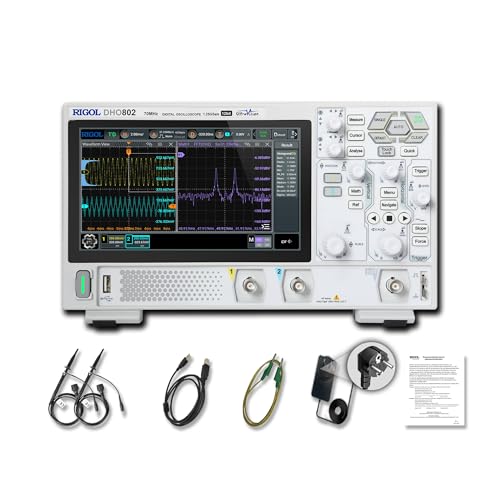
The Rigol DHO924S around $899 is the best benchtop oscilloscope alternative. It offers 250 MHz bandwidth, 4 channels, 50 Mpt memory, an IPS touchscreen, a function generator, WiFi, and CAN/LIN decoding. As a pure oscilloscope, the DHO924S is dramatically more capable than the AD3's oscilloscope function. But it has no logic analyzer, no network analyzer, and no power supply outputs. The AD3 and DHO924S complement each other rather than compete.
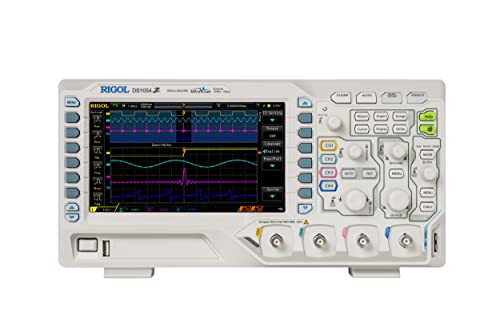
The Rigol DS1054Z at $349 provides 4 channels, 50 MHz bandwidth, 12 Mpt memory, and protocol decoding as a standalone benchtop scope. Like the DHO924S, it's a better oscilloscope but lacks the logic analyzer and additional instrument functions.
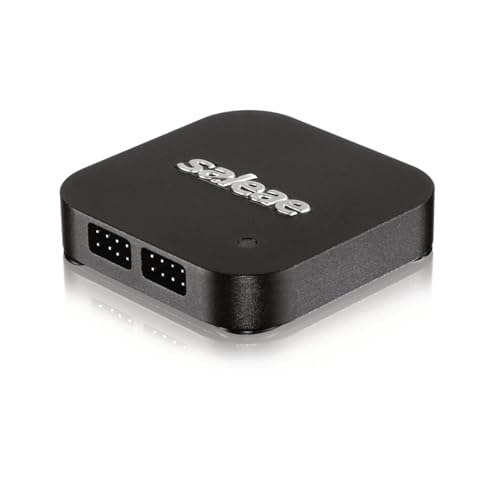
For users who primarily need a logic analyzer, the Saleae Logic 8 and Logic Pro 8/16 are dedicated logic analyzers with excellent software. They lack the oscilloscope, function generator, and power supply functions of the AD3 but offer superior logic analyzer performance. If digital protocol analysis is your primary need and you already have a scope, a dedicated Saleae might be a better choice.
The Digilent Analog Discovery 2 (the AD3's predecessor) may be available at a lower price and offers similar functionality with slightly lower specifications. If the AD2's sample rates are sufficient for your work, it can be a more budget-friendly option.
For students, the Digilent Analog Discovery Studio expands on the AD3 concept with a breadboard-integrated design specifically for educational lab settings. It's worth considering for institutional purchases where the integrated form factor simplifies lab setup.
Our Verdict
The Digilent Analog Discovery 3 isn't really an oscilloscope — it's a multi-instrument lab that happens to include a 2-channel oscilloscope alongside 13 other tools. The 16-channel logic analyzer is its killer feature for embedded work: you can monitor SPI, I2C, GPIO pins, and PWM outputs simultaneously, something a 4-channel scope simply cannot do. WaveForms software is genuinely excellent — one of the best oscilloscope software experiences on any platform. As a pure oscilloscope, the 125MSa/s sample rate and 32Kpt memory are real limitations that you'll notice on any non-trivial analog signal. This is the right tool if you need a logic analyzer AND a scope AND a function generator and can only buy one device — especially for embedded development and student labs. If you primarily need to measure analog signals or capture long waveforms, a dedicated benchtop scope will serve you better.
Digilent Analog Discovery 3
$379
Prices may change · Free shipping with Prime
◆ Full Specifications
| Full Specifications | |
|---|---|
| Bandwidth | 50MHz |
| Sample Rate | 0.125GSa/s |
| Channels | 2 |
| Memory Depth | 32 Kpts |
| Display Size | N/A (Software) |
| Display Type | Software (WaveForms) |
| Form Factor | Usb |
| Weight | 0.15kg |
| Dimensions | 107 x 64 x 21 mm |
| Protocol Decoder | SPI, I2C, UART, CAN |
| Function Generator | Yes |
| WiFi | No |
| Battery Option | No |
| Trigger Types | Edge, Pulse, Protocol |
◆ Frequently Asked Questions
Can the Analog Discovery 3 replace a benchtop oscilloscope?
What is WaveForms and do I need to pay for it?
How does the 16-channel logic analyzer compare to dedicated logic analyzers?
Can I use the AD3 without a PC?
What does the network analyzer function do?
Is the AD3 good for Arduino projects?
How does the AD3 compare to the Rigol DHO924S?
What's the difference between the Analog Discovery 3 and the Analog Discovery 2?
◆ Related Buying Guides
Compare With Similar Scopes
◆ Head-to-Head Comparisons
Digilent Analog Discovery 3
$379
Prices may change · Free shipping with Prime