PicoScope 2204A vs Siglent SDS2104X Plus
Head-to-head spec comparison to help you pick the right scope for your bench.
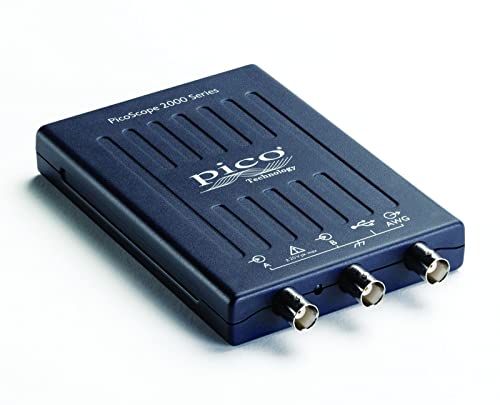
Pico Technology
$155
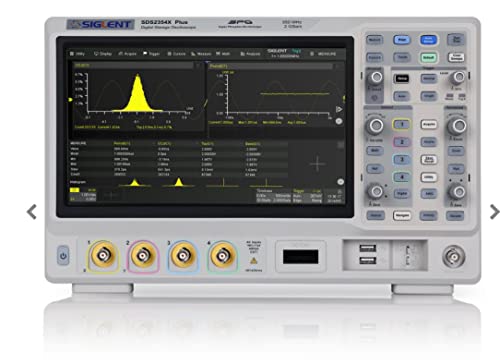
Siglent
$1399
Spec-by-Spec Comparison
| Spec | PicoScope 2204A | Siglent SDS2104X Plus |
|---|---|---|
| Bandwidth | 10 MHz | 100 MHz |
| Sample Rate | 0.1 GSa/s | 2 GSa/s |
| Channels | 2 | 4 |
| Memory Depth | 8 Kpts | 200 Mpts |
| Display Size | N/A | 10.1" |
| Weight | 0.15 kg | 4.5 kg |
| Price | $155 | $1399 |
| Rating | 6.5/10 | 8.0/10 |
| Protocol Decoder | Yes | Yes |
| Function Gen | Yes | Yes |
| WiFi | No | No |
| Battery | No | No |
| Buy on Amazon | Buy on Amazon |
Pros & Cons
PicoScope 2204A
Pros
- PicoScope 7 software is genuinely excellent — Reddit consistently ranks it above any standalone scope UI
- 16 protocol decoders included free — SPI, I2C, UART, CAN, LIN, FlexRay, I2S, and more
- Built-in AWG function generator in a $185 package
- Ultra-compact and USB-powered — fits in any laptop bag
- Free lifetime software updates — Pico Technology has an outstanding track record of continued improvement
- Up to 12-bit enhanced resolution mode for precision measurements
Cons
- 10MHz bandwidth is severely limiting — fine for audio and slow digital, useless for fast SPI or RF
- 8Kpt buffer memory is tiny — long captures require streaming mode
- Requires a PC to operate — completely useless without a laptop or desktop
- 100MSa/s sample rate means you're already at Nyquist limits with 10MHz signals
- Only 2 channels of analog input
Siglent SDS2104X Plus
Pros
- 200Mpt memory depth is exceptional — capture minutes of data at full sample rate
- 10.1-inch IPS touchscreen is genuinely gorgeous to work with
- 2GSa/s sample rate handles fast signals better than 1GSa/s scopes
- Comprehensive protocol decoding including FlexRay, I2S, and MIL-STD-1553
- Built-in 25MHz AWG function generator
- Feels like a professional instrument — because it is one
Cons
- At ~$1,099, it's at the top of hobbyist budgets
- 100MHz bandwidth is surprisingly low for this price tier
- Large and heavy — needs permanent bench space
- Overkill for casual Arduino projects or simple bench work
Our Verdicts
PicoScope 2204A
The PicoScope 2204A is the USB scope that Reddit actually respects — unlike the Hantek 6022BE, Pico Technology backs this with genuinely excellent software that gets free updates for life. PicoScope 7 is arguably the best oscilloscope software on any platform, with 16 protocol decoders, advanced math, and a modern interface that makes standalone scope UIs feel dated. The catch is obvious: 10MHz bandwidth and 8Kpt memory mean this is a low-frequency instrument. Audio work, slow serial protocols, power supply debugging, and basic Arduino verification are all fine. Anything above a few MHz — fast SPI, I2C at 400kHz+, or RF work — is off the table. If you already have a laptop and need a scope for bench work under 10MHz, the software quality alone makes this worth the $185. If you need a scope that works without a computer or handles faster signals, look at the DHO802 instead.
Siglent SDS2104X Plus
The Siglent SDS2104X Plus is a professional-grade scope that happens to be affordable enough for serious hobbyists, and using it for a long debugging session makes the price feel justified. The 200Mpt memory depth is the headline — you can capture minutes of data at full sample rate, then scroll back and zoom into any moment without re-triggering. The 10.1-inch IPS touchscreen is excellent. The comprehensive protocol decoding (including FlexRay and I2S) makes it the right tool for serious automotive or audio embedded work. The surprise is that all this comes with only 100MHz bandwidth — you're paying for depth, features, and build quality, not raw frequency response. At $1,099, this is a serious investment. It only makes sense if you do electronics work regularly enough to amortize that cost, and if you want an instrument you genuinely won't outgrow.